Context
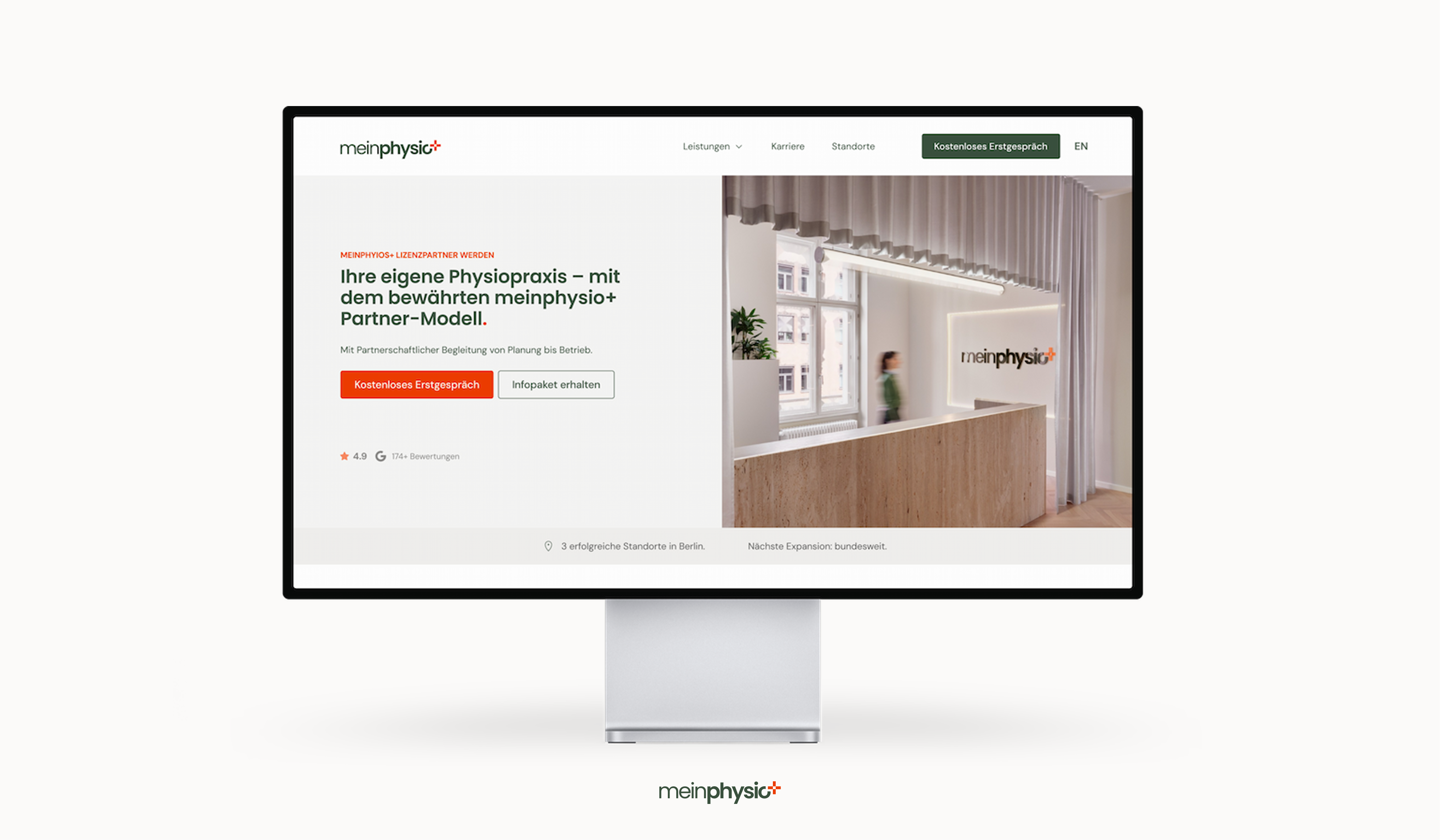
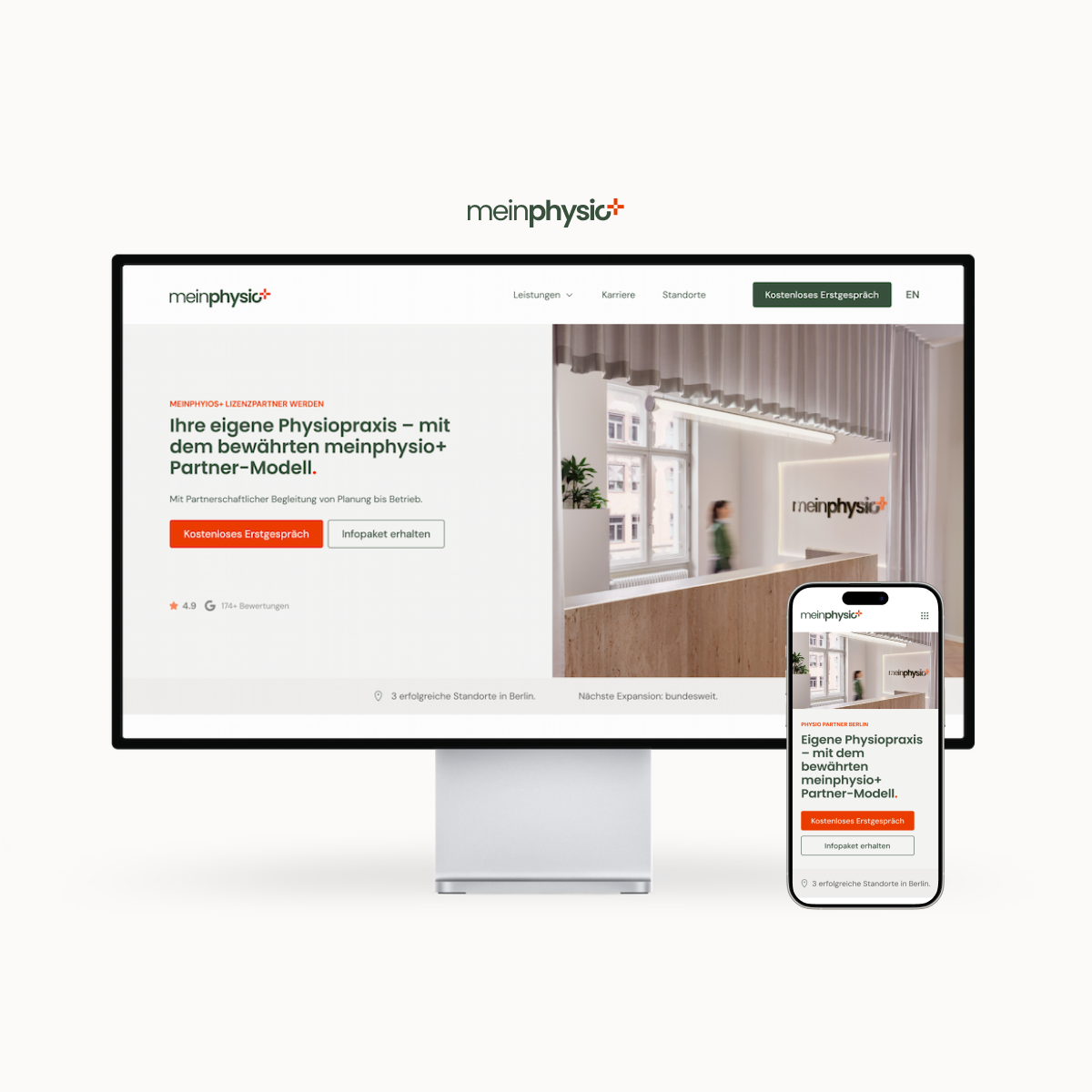
meinphysio+ is a fast-growing physiotherapy platform expanding through a franchise model.
The challenge was designing a conversion system that could address multiple audiences — physiotherapists, practice owners and investors — each with different motivations and decision paths.
The goal was to create a structured, high-performing funnel that transforms complex business and operational information into clear, actionable user journeys.
My role
Senior Product & Brand Designer
Scope:
– End-to-end UX/UI design
– Funnel optimization & CRO strategy
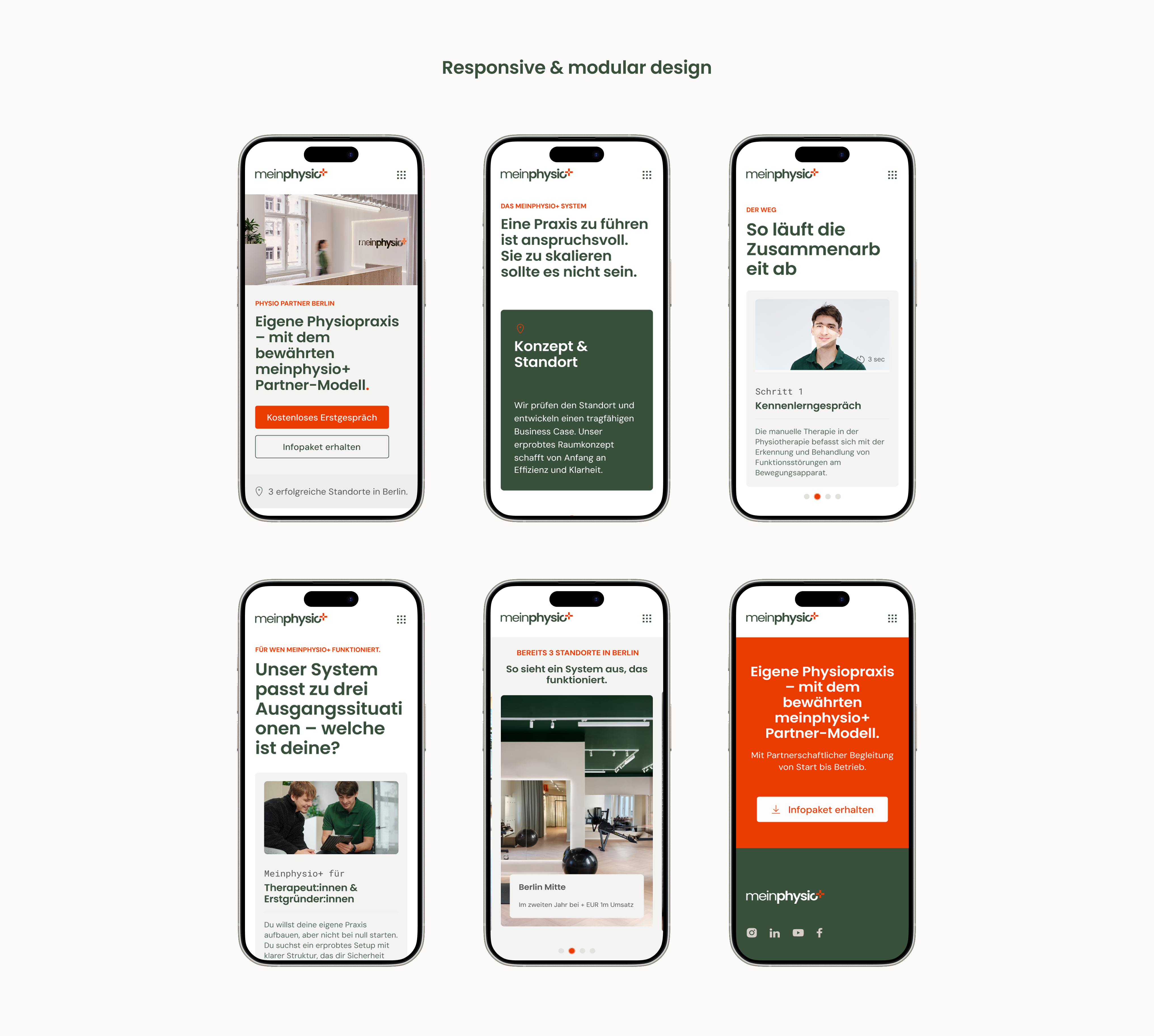
– Design system adaptation
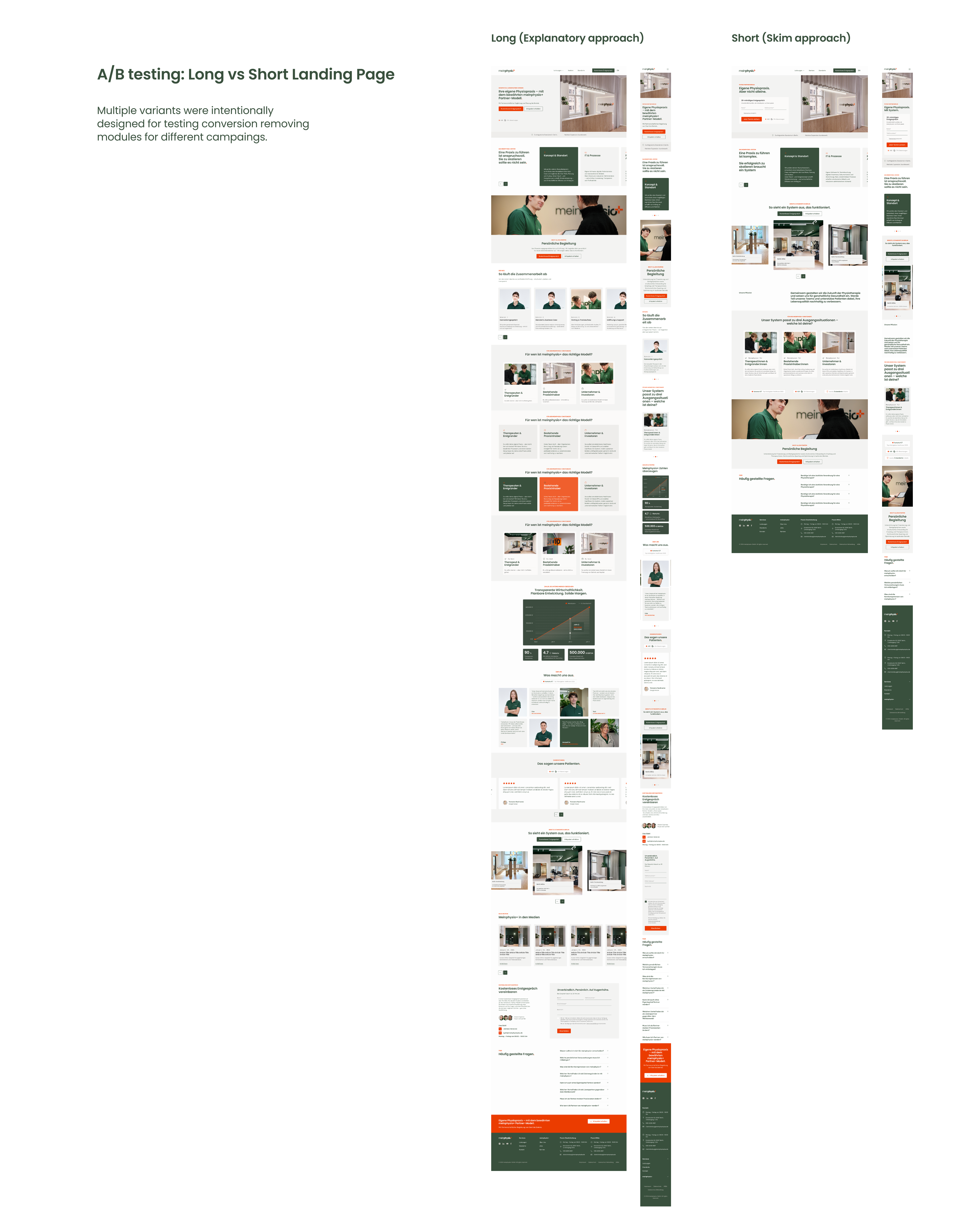
– Landing page architecture
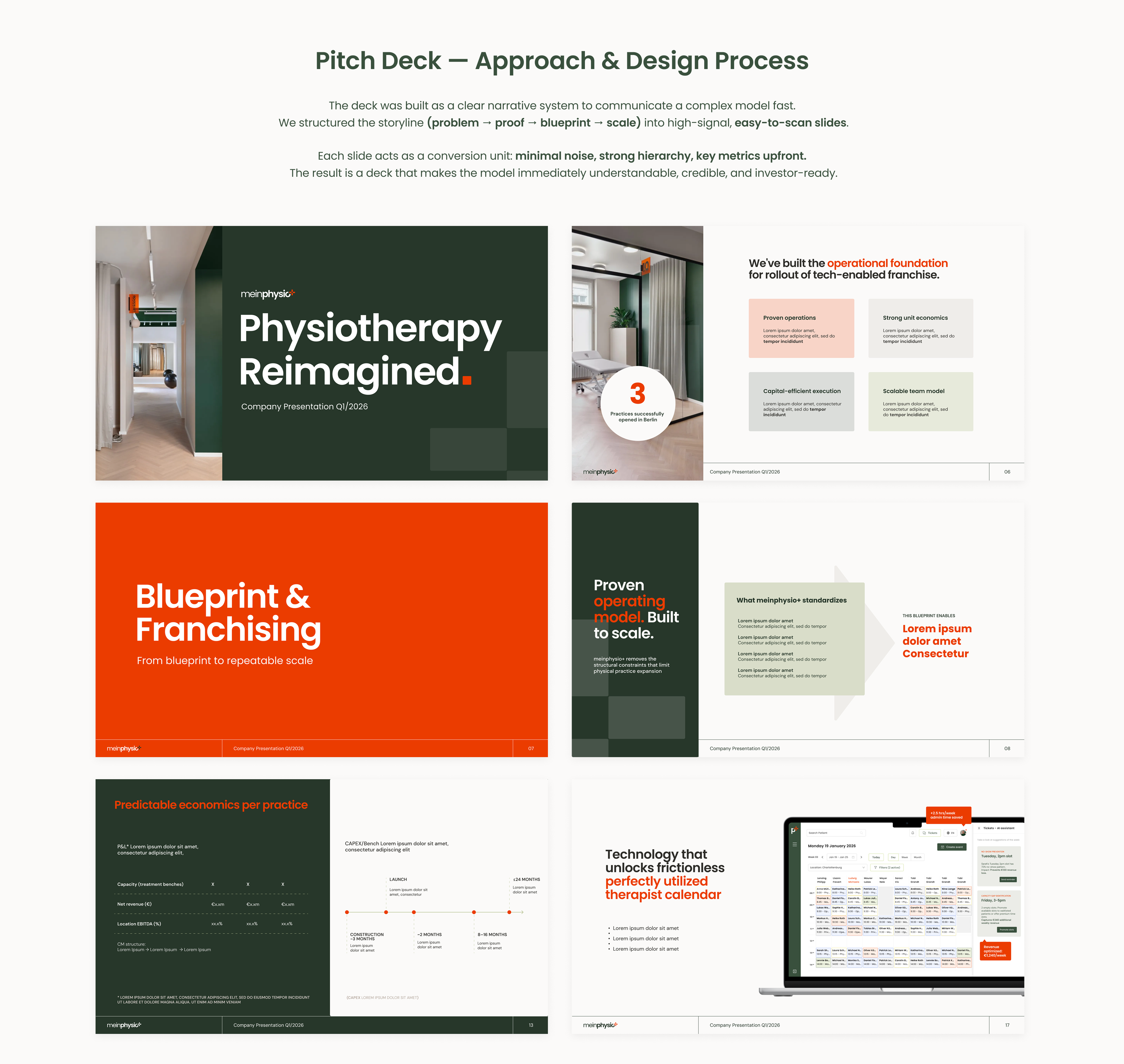
– Pitch deck & visual narrative
Collaboration:
Worked closely with founder, product, and engineering.
Problem/Challenge
The platform needed to address multiple audiences with different goals:
– therapists starting a practice
– existing clinic owners
– investors
At the same time, the funnel had to:
– reduce cognitive load
– increase clarity of positioning
– convert efficiently across different entry points
Design & Build Process
The project was executed across three layers:
1. Narrative & Conversion Strategy
Definition of user segments, messaging hierarchy, and decision flow.
2. Rapid Prototyping (AI-assisted)
Initial drafts of landing structures and layouts were explored using AI coding tools (Lovable), enabling fast iteration on structure and interaction.
3. Design System & Final UI (Figma)
Final components, layouts, and visual system were built in Figma:
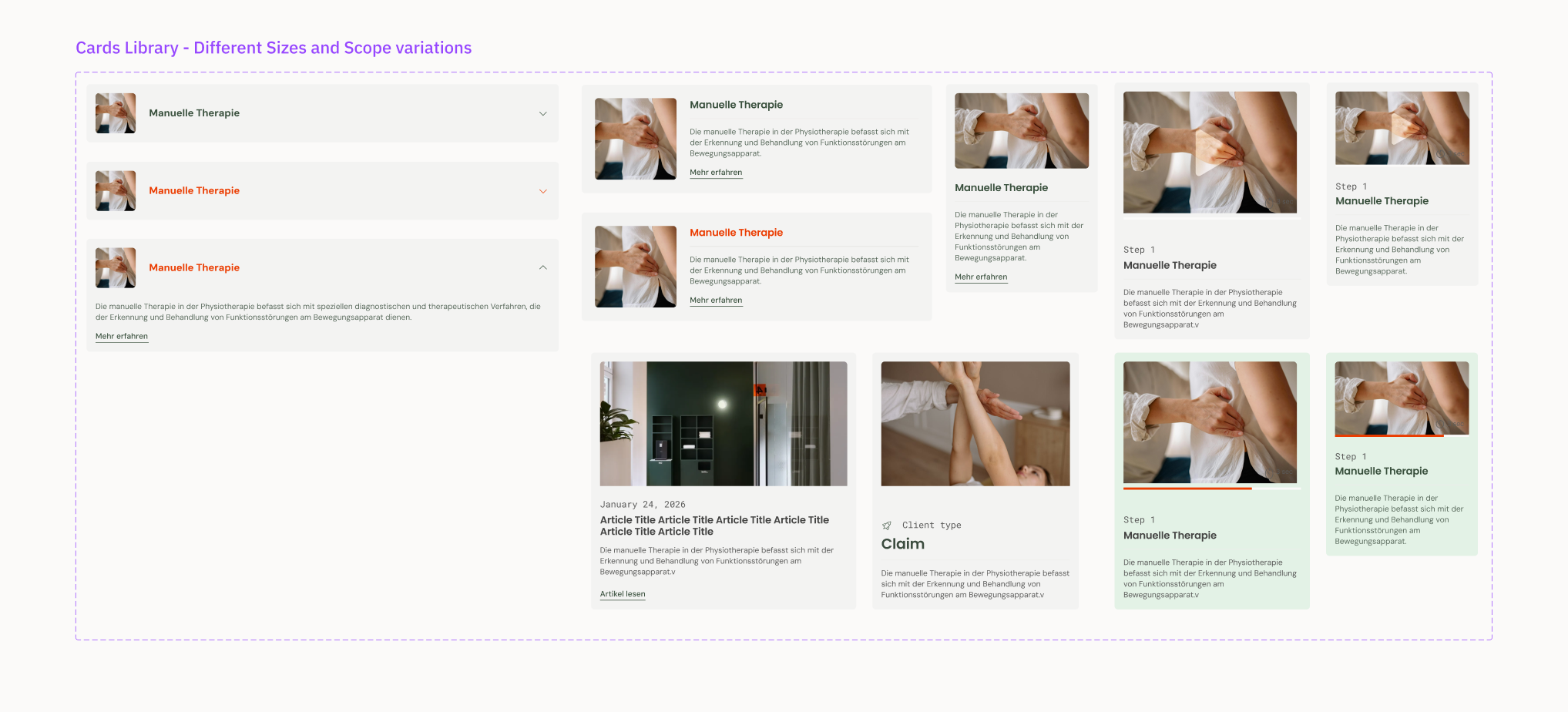
- scalable component library
- token-based styling
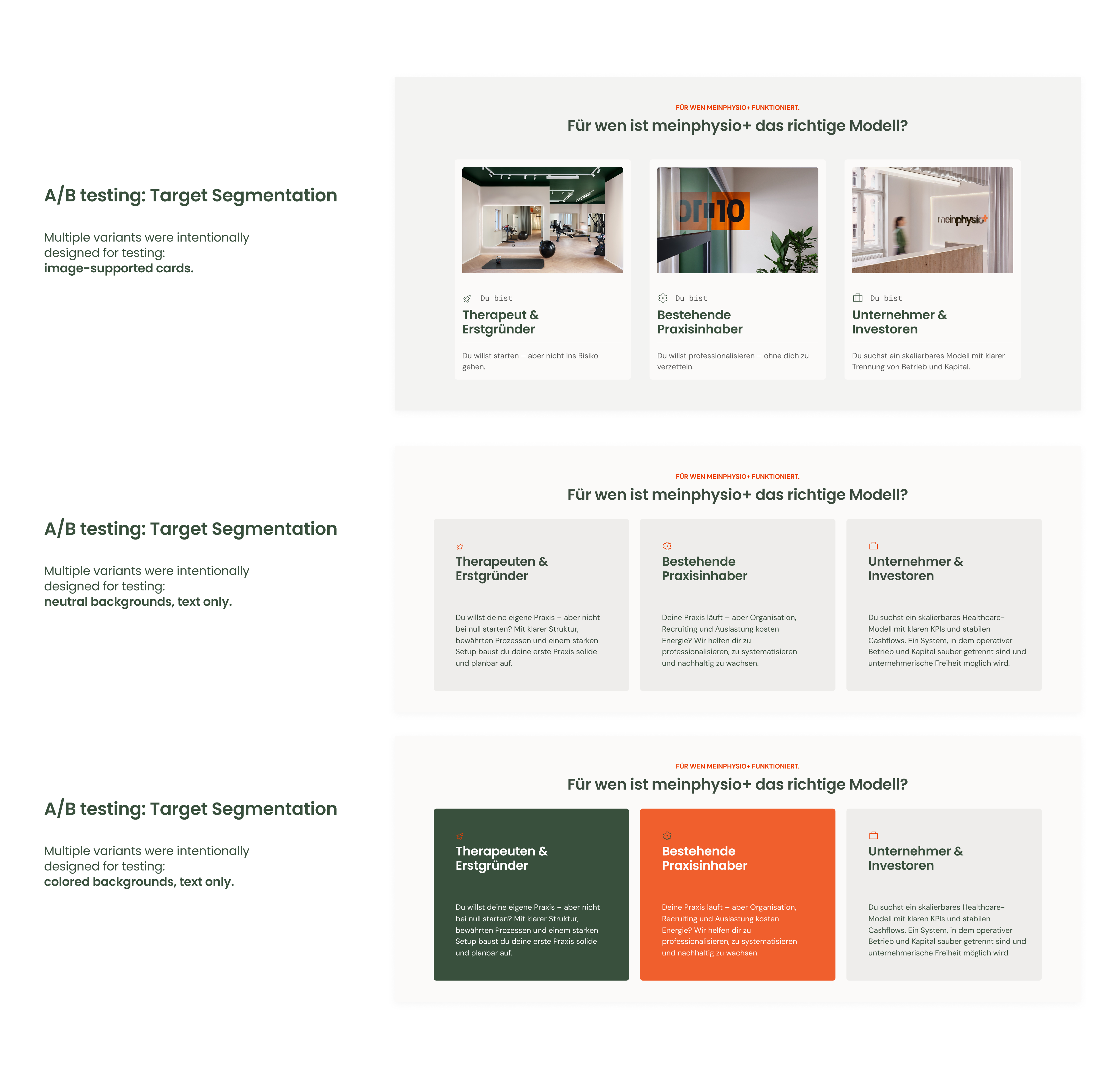
- variations for A/B testing
Information Architecture & Conversion Modules
Audience Segmentation → Faster Decision-Making
Instead of generic messaging, the new cards experience immediately segments users into clear entry points.
This allows users to quickly recognize themselves and access relevant content without cognitive overload.
Impact:
- Faster orientation and reduced bounce risk
- Higher engagement across segmented paths
- Improved conversion across different audience types
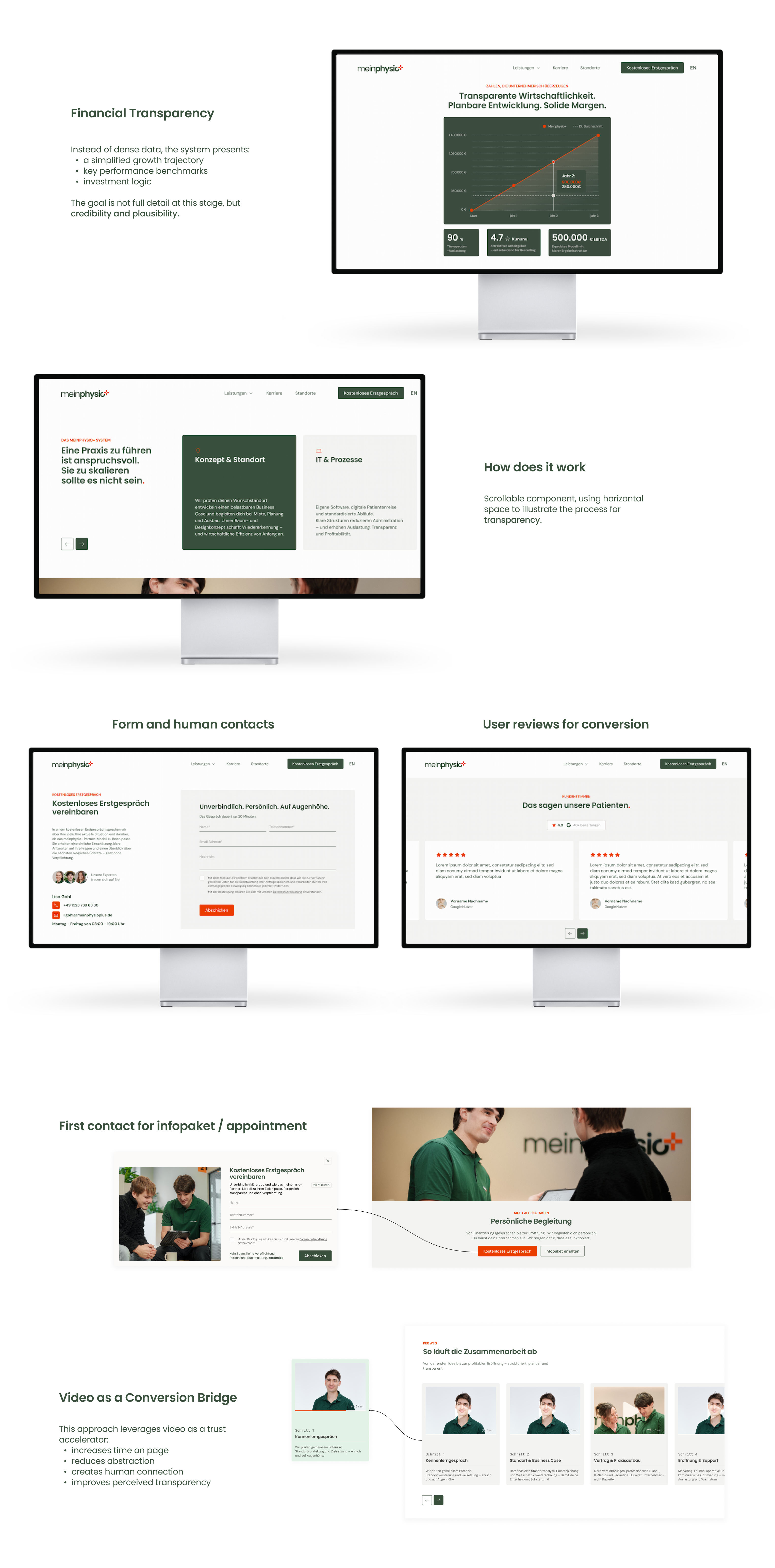
Financial Transparency → Trust & Conversion
To address skepticism around financial claims, a dedicated transparency module was introduced.
Instead of abstract messaging, the system shows:
- growth trajectories
- key performance indicators
- simplified economic logic
Impact:
- Increased trust perception
- Reduced hesitation in decision-making
- Stronger conversion in high-stakes interactions
Video → Trust Accelerator
Short-form videos were introduced to explain the operational model through real people and real scenarios.
Impact:
- Increased time on page
- Reduced abstraction of complex concepts
- Stronger emotional connection and credibility
Videos were kept under ~90 seconds to balance clarity and completion rates.